

Most young people don’t know how to respond when a friend is hurting.
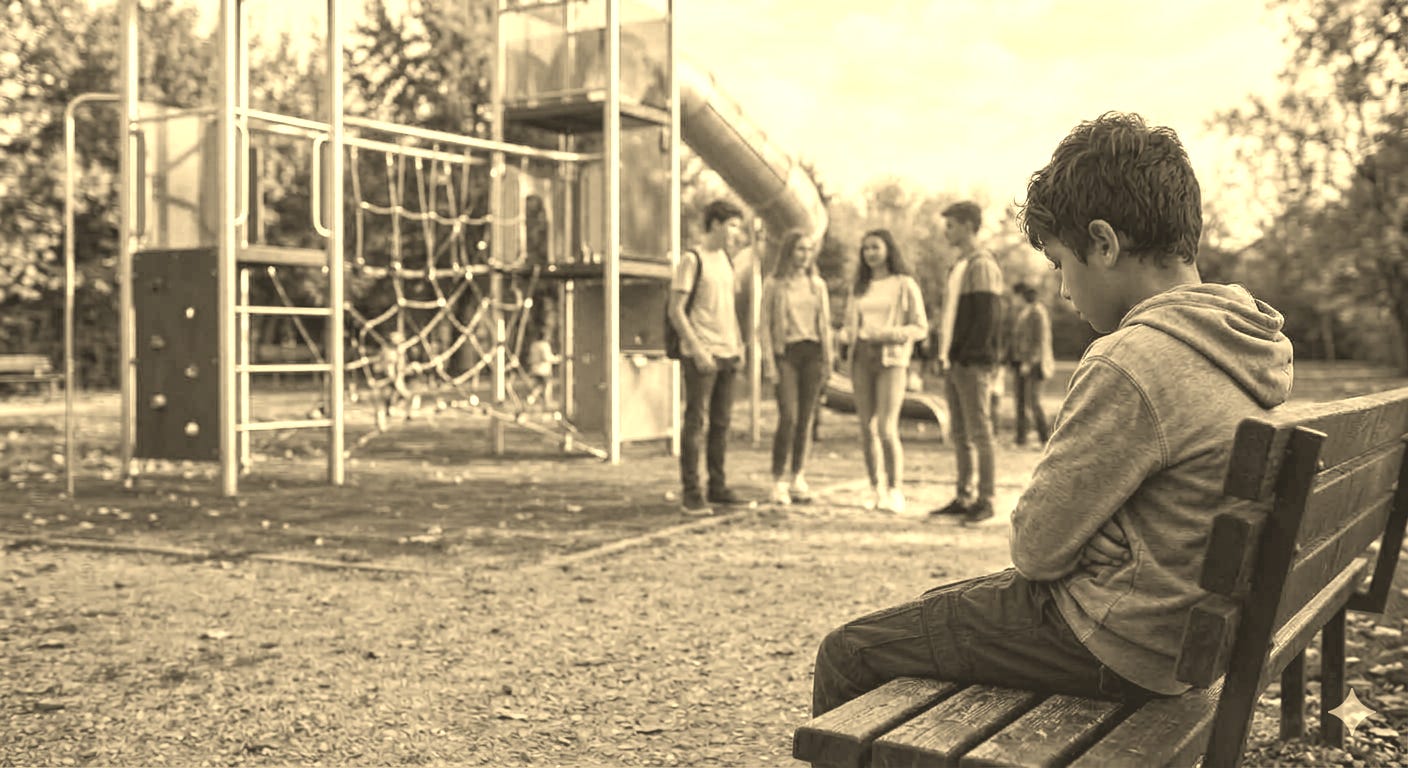
…so they either disappear (just when they are needed most), or they rush to fix the pain—unintentionally making it worse.
YOU can change that.
The majority of youth will freeze because no one has ever shown them what to say or do.
Honestly, most adults freeze, too...
The Heartside Project exists to change that. It’s a growing resource for educators, parents, coaches (and anyone else who raises or influences young people). It’s built on a simple, research-informed idea:
You don’t need to fix the sad. You just need to show up.
Children and youth can learn this. Adults can teach it. When we do, we give kids something they’ll carry into every hard moment of their lives—theirs and others’… and we can help build a society that knows how to support grief well.

What You’ll Find in Heartside Magazine
Each weekly edition arrives with community, education, encouragement, and tools you can use…
The Front Porch: A short note from me to open each issue… nothing heavy, just a moment to catch up before we get to the rest.
Heartside Heroes: Real stories of young people [and the adults beside them] showing up well for someone who was hurting.
From the Framework: One piece of the Heartside Framework each week… foundational teachings worth returning to often.
Heartside Lesson Idea: A small teaching seed drawn from the Heartside Framework… an activity, a conversation, a reframing, or a practice you can bring into your classroom or home this week, and a link to the premium Heartside Lesson Plan.
Research… Translated: A finding from the research world, brought out of the journal and into everyday language and possible application, and a link to the premium Research… Explored.
Heartside Lens: Where we notice Heartside moments in the media and culture around us… in books, movies, television, music, poems, essays, and more. What they get right, what they miss, and what they teach us about showing up.
The Back Porch: Where we sit down together at the end of each issue. Your space as much as mine… pull up a chair.
How this magazine works
The Heartside Magazine itself will always be free. Every issue, no paywall… ever.
Two companion offerings sit alongside the magazine and will eventually move to the paid tier:
Heartside Lesson Plan: A fully prepared, 20-minute lesson for educators and parents… designed to teach or reinforce a Heartside Hero skill. Each lesson includes age-appropriate adaptations and variations for individuals, small groups, or full classrooms. The planning, differentiation, and printables are all done for you… and ready when you are.
Research… Explored: A closer look at the study behind this week's finding… how the researchers found what they found, what related research says, and how it might change your practice. For those who want to walk a little further into the research.
During our kick-off, though, both of these are free for all Heartside Magazine subscribers as a thank-you to our earliest readers… available at no cost.
When the paid tier arrives, I’ll let you know at least a month in advance. The magazine will remain free forever. If the premium sections have become part of your weekly rhythm and you’d like to keep them, you’ll have the option to do so. If not, you’ll still receive the magazine every week, exactly as you’ve come to know it.
Legacy Subscribers
Heartside Magazine is fully self-funded... So during our startup phase, every paid subscription is a vote; it’s a reader saying, “Keep going. This matters.”
Legacy Subscribers are first through the door of the Inner Circle, our membership community (part planning table… part porch swing). It’s a smaller circle that cares for one another, cheers one another on, and helps shape where this magazine and its mission go next. Real support. Real interaction. Real people.
The Research… Explored and Heartside Lesson Plan premium sections are currently free for everyone. But even when they join the Inner Circle in the paid tier, your low rate will be locked in as long as your subscription stays active. Helping support the mission now will save you money in the long run. How cool is that?
Legacy Subscribers pay $5/month or $50/year. This rate is locked in as long as their subscription stays active… even when prices rise at the paywall launch.
The Books
The Heartside Project also includes two books: Wendell’s Wag (a picture book about a boy named Leo who befriends his dog after the death of a beloved canine friend next door) and Raising Heartside Heroes (a companion book filled with research and strategies for the grown-ups who do the teaching). Both will be released soon. But this magazine and community are where the work lives week to week, and it will continue long after the books are on the shelves.
You don’t need to fix the sad. You just need to show up.
About Me
I’m Jepper: wife, mother, grandma, youth leader, researcher, and educator. My background is in mathematics, with an MA in mathematics education. I’ve completed the doctoral coursework in Community Care and Counseling, with a specialization in Traumatology. My primary focus was (and is) resilience: “Why do some people emerge from a traumatic experience or loss with post-traumatic growth while others slide into depression or post-traumatic stress?” More importantly, I wanted to discover what we, as individuals and as a society, can do to help young people build resilience before they face trauma.
The Heartside Project grew out of these questions.
Jepper Lynn Butler
👩🏻💻
* In this day and age, it is understandable for people to question the origins of anything they see, read, or hear… Thus, I feel it is oddly necessary to reassure my audience of my humanity.
Yes, I am, indeed, human.
Often, the next logical question is, “Do you use AI, and if so, how?” To ensure full transparency, I disclose the following:
I learned about [and leaned on] Grammarly during my doctoral studies (though I stubbornly ignored its “passive voice” warnings). At the time, I saw AI as just an editor (and a much-needed spell-check); I still primarily use it that way.
I have recently begun to use AI to assist with pdf and template layouts (because they are much more asthetically pleasing than any I could design...). It also comes in handy during the early, gathering stages of research (with research checked against the proper sources before being used). I have, at times, been known to ramble about my ideas and thoughts into a microphone, and then ask for an AI summary… sometimes even asking for help categorizing my divergent ideas into logical groups and topics.
Nevertheless, seed ideas, as well as both original and final writings (for better or worse), are all mine. As with many things, I believe that as long as AI is used as a tool and not a crutch, it can be a positive influence. (As I often told my students about calculators when I taught math...)
Feel free to reach out if you have any questions about my use of AI.
